Here's a thinking process:
1. **Analyze User Input:**
- **Data:** Two image URLs with titles:
- URL 1: `https://blog.fantasypros.com/content/images/2020/10/image.png` | Title: `[9/30/20] Expert Consensus Rankings 2.0: A Freshened Up Experience`
- URL 2: `https://images.daznservices.com/di/library/sporting_news/5c/9/week-6-fantasy-wr-rankings-ftr_14yu53x2myul11u39ogn8mbaqs.png?t=225052357\u0026quality=100` | Title: `41 Best Images Fantasy Football Wr Rankings Week 5 / Fantasy Football`
- **Image Rules:** Use only provided URLs. Place near relevant section. Write descriptive alt attributes fitting "fantasy pros rankings week 5".
- **Brief:**
- Main keyword: "fantasy pros rankings week 5"
- Target locale: en_us
- Tone: friendly
- Audience lens: busy practical reader
- Content angle: reader pain points and solutions
- Writing pattern: question-led sections with clear answers
- Section style: specific benefit headings
- Uniqueness seed: WNPGTYFQER (use silently to guide distinctiveness)
- **Global Requirements:**
- Language: en_us
- Adapt to US context
- Use lens/angle/pattern/style/seed silently
- Avoid AI clichés, filler, template names
- Vary rhythm, headings, examples
- Keep claims reasonable, no inventing facts
- Clean HTML only: ``
`
Intro...
`
`
Heading 1 (Image 1)
`
`
![]()
`
`
Q&A content...
`
`
Heading 2 (Text-only)
`
`
Q&A content...
`
`
Heading 3 (Image 2)
`
`
![]()
`
`
Q&A content...
`
`
Heading 4 (Text-only)
`
`
Q&A content...
`
Check constraints:
- "For each suitable image, create a related
, add the ![]() , then write a helpful
." -> So H2, then img, then p. That matches.
- "Use 3-6
sections." -> I'll do 4.
- "Writing pattern: question-led sections with clear answers" -> I'll start each section with a direct question, then answer it.
- "Section style: specific benefit headings" -> Headings will focus on a concrete benefit.
- I'll blend them: H2 = Benefit heading. First line of section = Question. Then answer.
- Let's draft carefully.
3. **Draft - Mental Refinement (Iterative):**
*Title:* Fantasy Pros Rankings Week 5: Quick Fixes for Your Weekly Lineup
*Intro:* Managing a fantasy roster should feel like a strategic advantage, not a weekend chore. When matchup reports clash and waiver wire noise builds up, you need a reliable compass. Fantasy pros rankings week 5 strips away the guesswork by consolidating expert insights into one practical format, giving you the exact information you need to set your lineup with confidence.
*H2-1:* Cut Down on Research Hours with Updated Consensus Lists
*Img1:* `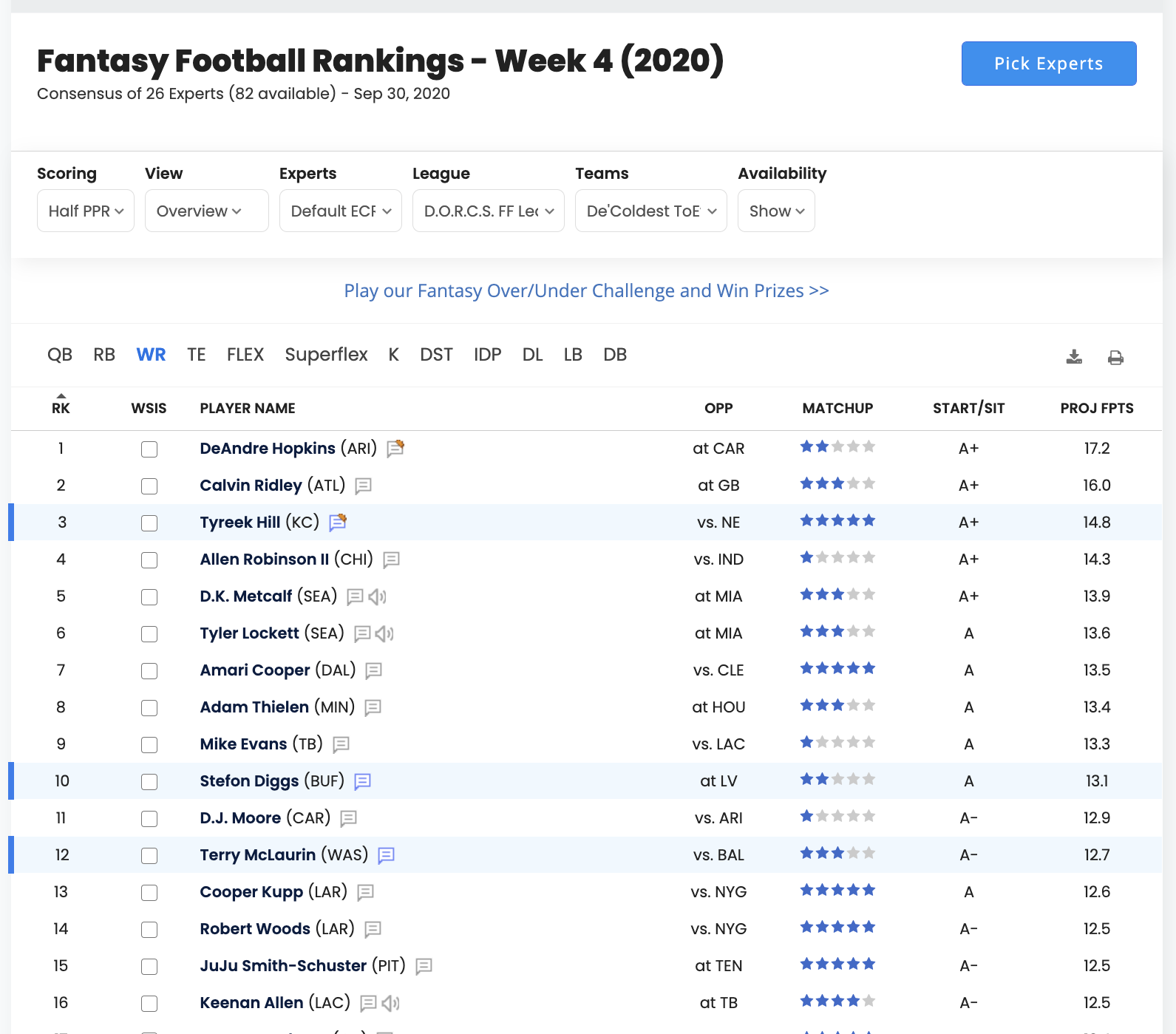 `
*P1:* How can you stop drowning in scattered preview articles? The answer lies in leaning on aggregated experts rather than chasing every new blog post. Instead of tabbing through ten different sites, you can check a unified consensus table that highlights rising backs, reliable tight ends, and handcuff values worth stashing. This approach trims your prep time to a single focused session, leaving you free to handle work, family, or actual football watching without sacrificing your lineup strategy.
*H2-2:* Lock In Safe Starters Before Sunday Kickoff
*P2:* What keeps managers up on Thursday night worrying about a risky flex spot? It is usually the fear of banking on a player with a shaky schedule. By cross-referencing top-tier rankings with upcoming defensive matchups, you can swap out volatile names for consistent volume getters. Focus on players facing weak run defenses or struggling secondary corners, and you will naturally build a roster that scores steady points instead of hoping for a breakout game.
*H2-3:* Target Wide Receivers Without the Guesswork
*Img2:* `
 `
*P3:* Do you keep second-guessing your WR lineup every single week? You can eliminate that hesitation by tracking target share trends instead of relying on hype. Quarterback injuries, defensive pass rush rotations, and route-running efficiency all shift week to week, but updated receiver lists already factor in those variables. When you align your Sunday choices with a fresh skill-position tier breakdown, you stop guessing and start banking on proven route trees and guaranteed snap counts.
*H2-4:* Prepare Your Waiver Wire Moves for Next
